
Table of Contents
Singapore generates 60,000 tonnes of e-waste every year. Most of it is invisible — untracked, unrecycled, and quietly accumulating in drawers or ending up in general waste. At Green IO Singapore 2026, a two-day sustainability conference held on April 14–15, Cinch joined a Think Tank dedicated to one of the most urgent questions in sustainable tech: how do we solve the e-waste tracking data gap?
Here’s what happened, what we learned, and why device subscription is one of the most practical tools we have for building a truly circular ecosystem for consumer electronics.
The Think Tank: Three Perspectives on One Problem
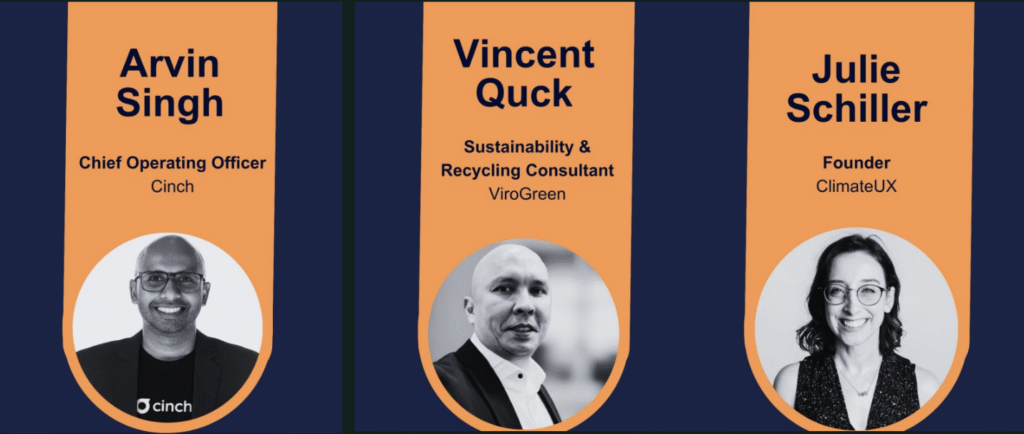
The session brought together three organisations each tackling e-waste from a different angle. Together, the presentations made the case that solving e-waste requires action at every layer — infrastructure, behaviour, and business model.
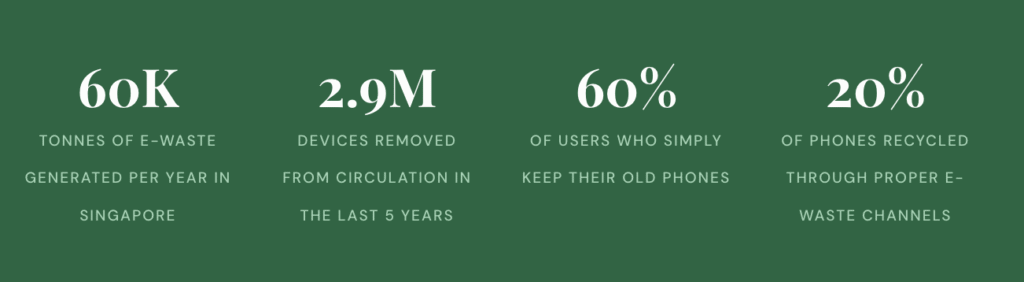
Singapore leads the region in smartphone adoption at 97% ownership — and we replace our phones every 2.7 years, significantly faster than the global average of 3.5 years. Each new device produced requires roughly 268kg of raw materials. Most of that is unrecoverable without proper recycling. The gap between what’s generated and what’s tracked is enormous.
What the Think Tank Revealed
We don’t know where devices go
The moment a consumer product leaves a retailer, it largely disappears from any tracked system. There’s no consistent, lifecycle-wide data on whether it’s reused, stored, informally traded, or dumped.
Legislation is the most widely agreed solution
Across all three product categories, the group converged on a common view: better regulatory frameworks requiring auditing and tracking of devices throughout their lifecycle would create the data layer the industry currently lacks.
The invisible problem is a UX problem
The challenge isn’t consumer apathy, it’s invisibility. When people can’t see their impact, they can’t change their behaviour. Designing feedback loops — making recycling visible, social, and trackable — is as important as the infrastructure itself.
Good devices are being destroyed unnecessarily
An important point from the recycler’s perspective was raised. When Singapore introduced climate vouchers to encourage consumers to upgrade to energy-efficient appliances, recyclers saw a surge of perfectly functional devices arriving for processing. Regulation had, unintentionally, accelerated waste of working goods.
Where Cinch Fits the Circular Puzzle
Cinch is uniquely positioned to address. The circular economy for electronics is often pictured as a two-step system: consumers use a product, then recyclers reclaim the materials.
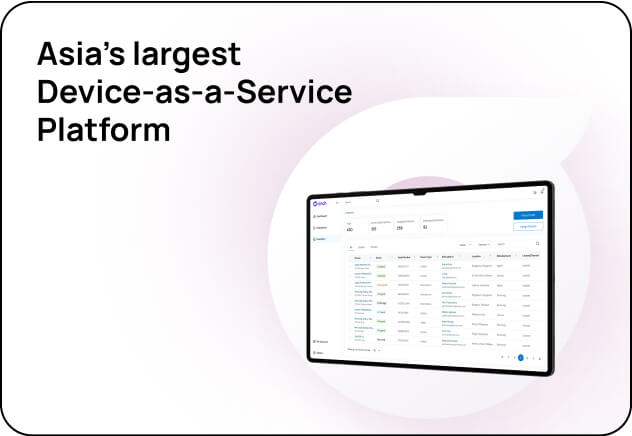
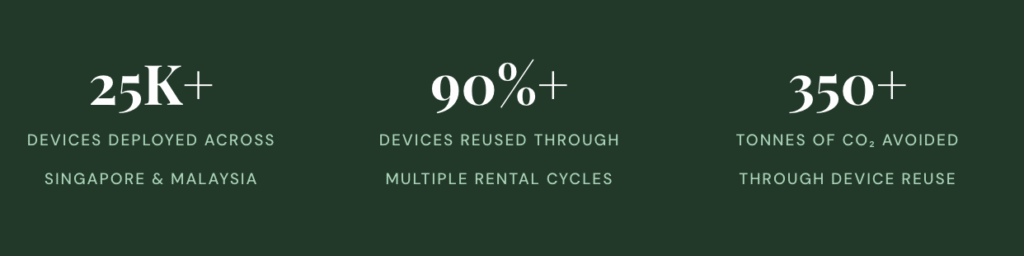
Cinch operates as Asia’s leading Device-as-a-Service platform. Instead of selling devices outright, Cinch offers businesses and individuals access to premium phones, laptops, tablets, and home appliances through simple monthly subscriptions. When a device is returned, it enters a refurbishment cycle — cleaned, tested, and redeployed to the next subscriber.
What Singapore Has Already Built — and What Comes Next
Singapore’s e-waste story isn’t starting from scratch. Meaningful progress has been made since Singapore’s Resource Sustainability Act was passed in 2019 and the Extended Producer Responsibility (EPR) scheme launched in 2021.
Since EPR launched, over 34,000 tonnes of e-waste have been collected — a near-tripling of the annual collection rate compared to the voluntary era. There are now over 1,000 collection points island-wide. Producers and importers are financially accountable for their products’ lifecycle. The infrastructure exists.
The gap that remains is not collection infrastructure. It’s the layer between active use and formal collection — the years when a device sits unused in a drawer, or the moment when a working appliance is surrendered for an upgrade. That’s the gap that better tracking legislation, better UX design, and smarter business models like device subscription can close together.
Closing The Loop at Green IO 2026
We’re proud to have been part of the Green IO Singapore 2026 Think Tank — and even prouder of the quality of the conversation it sparked. The e-waste challenge is solvable. The pieces are in place. What’s needed now is coordination, shared data standards, and business models that make doing the right thing the obvious thing.
Head to Green IO to learn more about the event & upcoming conferences.