
Table of Contents
At WWDC 2026 on 8 June, Apple announced iOS 27, iPadOS 27, macOS 27, watchOS 27 and visionOS 27, headlined by a rebuilt, more conversational Siri and a wave of Apple Intelligence features rolling out this fall. For businesses, the practical takeaway is simple: the free software is coming to supported devices, but the marquee AI features favour recent, Apple-silicon hardware — which makes fleet refresh timing the real decision for SMEs.
What Apple announced at WWDC 2026
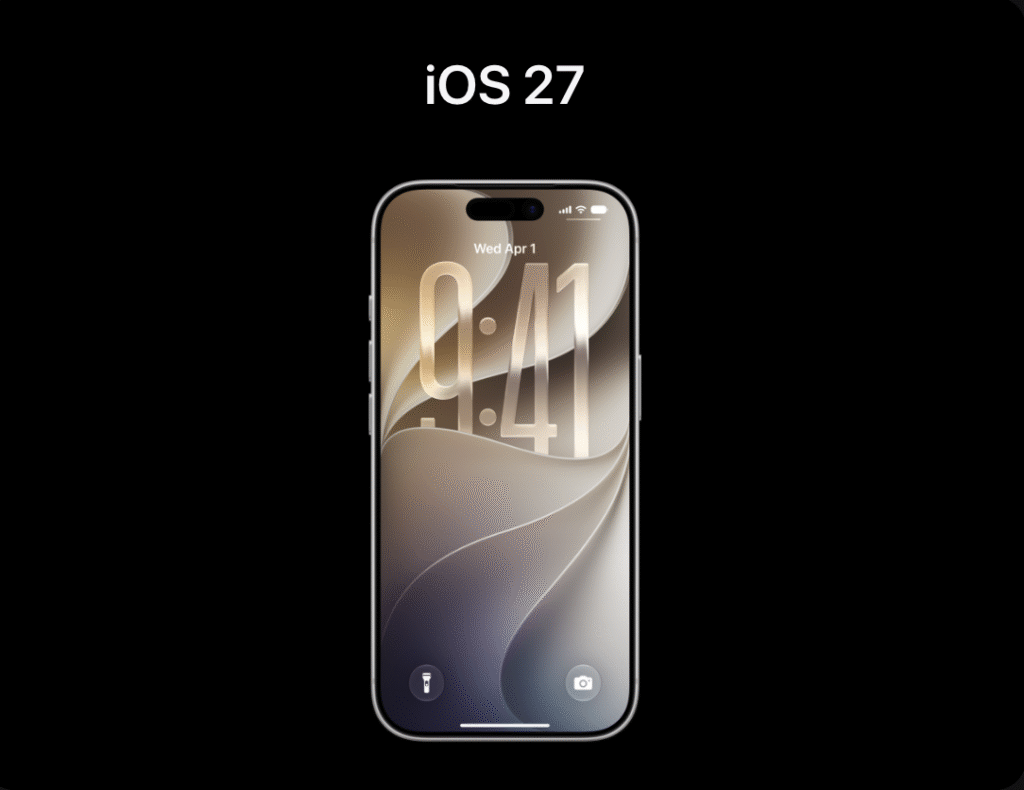
Apple’s keynote introduced the next generation of its operating systems — iOS 27, iPadOS 27, macOS 27 (reported under the “Golden Gate” name), watchOS 27, tvOS 27 and visionOS 27 — all free to install on supported devices this fall. The biggest theme was AI.
Apple unveiled a significantly upgraded, more conversational Siri — now a dedicated app with conversation history synced privately via iCloud — powered by Google’s Gemini model under the hood. The new Siri handles requests without routing them to separate third-party chatbots like ChatGPT, though the AI engine itself runs on Gemini. Apple Intelligence gained capabilities aimed at closing the gap with Google and Samsung.
There were productivity-relevant updates too: a rebuilt Spotlight and system-wide search across iPhone, iPad and Mac for faster, more reliable results; new AI photo tools (Reframe, Extend and an improved Cleanup); and design refinements to the Liquid Glass interface, including an opacity control.
Apple also expanded built-in child-account safeguards. Note one regional caveat reported from the keynote: the new Siri AI will not launch in the EU initially, which Apple attributes to the Digital Markets Act — a reminder that feature availability varies by market, so confirm timing for Singapore and Malaysia on Apple’s official channels.
What it means for your business devices
The headline for any operations or IT lead is that free OS upgrades extend the useful life of your existing devices — but only up to a point. The new Apple Intelligence and Siri features lean on recent processors: on-device AI generally needs Apple-silicon Macs and recent iPhone and iPad chips. A team still running older Intel Macs or several-generation-old iPhones can install the update, but will miss the features that actually change day-to-day productivity.
That turns WWDC into a planning signal. If your staff rely on Apple devices, the “this fall” timeline is when the AI capabilities become real, and it is the natural moment to assess which machines in your fleet are AI-ready and which are due for refresh. The risk of buying a wave of new hardware outright is that you tie up capital in devices that themselves age out of the next feature cycle.
This is exactly where a subscription or device-as-a-service model helps: you keep the team on capable, current hardware and refresh on a predictable schedule without a large capital outlay each cycle.
Who should pay attention?
This matters most to small and mid-sized businesses in Singapore and Malaysia that run on Apple hardware — design studios, agencies, consultancies, startups and professional-services firms where Macs, iPhones and iPads are core tools. If your people use Siri, Mail, Photos, Spotlight and notes-style workflows daily, the WWDC 2026 features will touch their work.
Operations and finance leaders should care too, because the decision is as much about cash flow as technology. Founders weighing whether to refresh a fleet, teams scaling headcount, and businesses standardising what “standard issue” looks like for new hires all face the same question this year: how to stay on AI-capable Apple hardware without a lumpy capital purchase. If your team runs mostly on older or mixed hardware, the answer is more urgent.
How to act on the WWDC 2026 updates
Start with an inventory: list which Macs, iPhones and iPads your team uses and which are recent enough to run the new Apple Intelligence features well. Flag the laggards — typically Intel Macs and older phones — as refresh candidates. Then decide the funding model. Buying everything upfront is an option, but it locks capital into depreciating hardware and leaves you facing another large purchase at the next cycle.
With a subscription model like Cinch for business, you choose AI-ready Macs, iPhones and iPads, pay a predictable monthly fee per device instead of buying, and enjoy the flexibility to upgrade as your needs change. That keeps your team current as Apple’s software cycle moves, converts a capital purchase into an operating expense, and means the next OS-and-AI leap is a planned upgrade rather than a budget shock. Plan the refresh ahead of the fall rollout so devices are ready when the features land.

Frequently Asked Questions
When will the WWDC 2026 software updates be available?
Apple said iOS 27, iPadOS 27, macOS 27 and the other 2026 operating systems will be available to everyone on supported devices this fall, following a developer and public beta period over the summer. Exact regional timing can vary, so confirm availability for your market on Apple’s official channels.
Do my business devices need new hardware to use the new AI features?
The free OS updates run on a wide range of supported devices, but the headline Apple Intelligence and Siri features generally require recent, Apple-silicon hardware. Older Intel Macs and several-generation-old iPhones or iPads may not support the most useful AI capabilities, which is why WWDC is a good prompt to review your fleet.
Should my SME refresh its Apple devices now or wait?
Use the fall rollout as your planning horizon. Audit which devices are AI-ready and refresh the ones that are not, ideally before the features go live. A subscription model lets you upgrade on a predictable schedule without a large upfront purchase, so you avoid both ageing hardware and a budget shock.
Is it better to buy or subscribe to business Macs and iPhones?
Buying can be cheaper over a very long ownership horizon if you never upgrade, but it ties up capital and you absorb depreciation. Subscribing spreads cost into predictable monthly payments and keeps you on current, AI-capable hardware — usually a better fit for an SME that wants to track Apple’s annual software-and-AI cycle.
What is the new Siri in iOS 27?
Apple announced a rebuilt, more conversational Siri — now a dedicated app with iCloud-synced conversation history — powered by Google’s Gemini model. It no longer routes queries to separate third-party chatbots like ChatGPT. For businesses, a more capable integrated assistant can speed up everyday tasks across iPhone, iPad and Mac.
Keep your team on AI-ready Apple hardware
WWDC 2026 made one thing clear: the software is free, but the productivity gains need current hardware.
See how Cinch helps Singapore and Malaysia SMEs equip teams with AI-ready Macs, iPhones and iPads for a predictable monthly cost at cinchtech.ai/business — and refresh on schedule as Apple’s annual cycle moves.